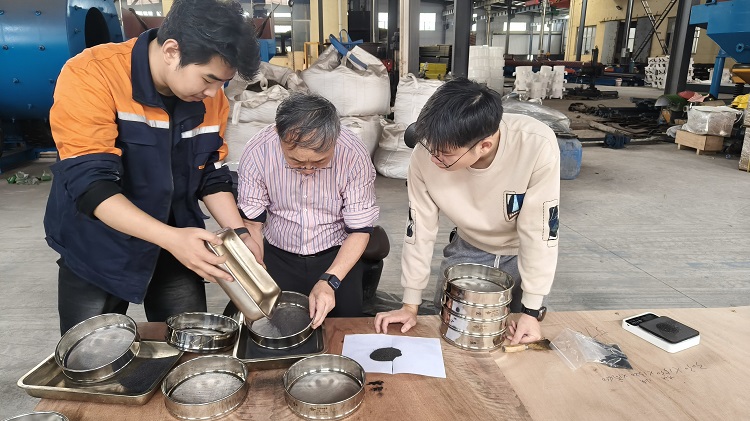
In many small and medium-scale mining projects, one of the most expensive mistakes is selecting equipment before properly understanding the material characteristics. Without mineral testing, equipment selection often becomes guesswork — leading to low recovery rates, unstable operation, and unnecessary investment costs.
Before designing any gravity separation process for gold, tin, tantalum-niobium, or other heavy minerals, proper testing is not just recommended — it is essential.
Understanding Your Material Comes First
Every ore body is different. Even within the same region, mineral size, clay content, and mineral composition can vary significantly. Key questions that should be answered through testing include:
What is the particle size distribution?
Is the valuable mineral coarse, fine, or ultra-fine?
How much clay or sticky material is present?
What is the density difference between valuable minerals and gangue?
Is the ore suitable for gravity separation?
Without these answers, it is impossible to design an efficient and reliable processing plant.
Why Testing Improves Equipment Selection
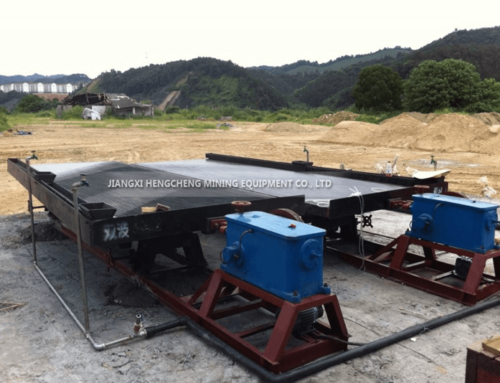
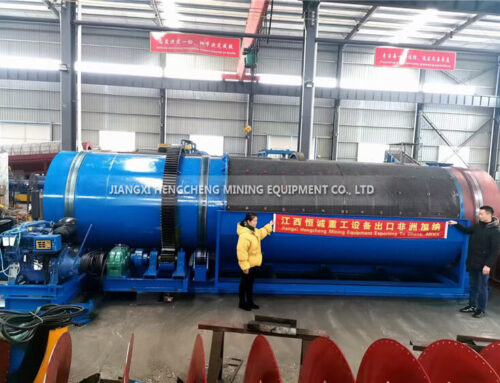
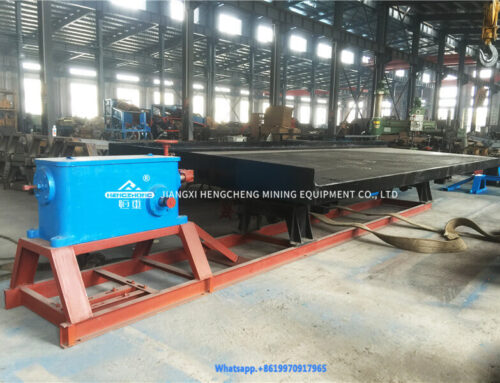
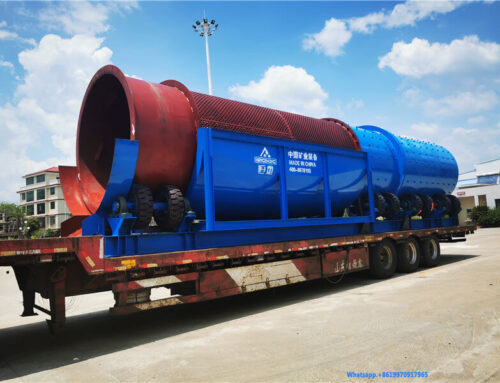
Many miners assume that popular equipment such as trommel screens, shaking tables, or spiral chutes will work for any project. In reality, the effectiveness of each machine depends heavily on ore characteristics.
For example:
High clay content may require stronger washing systems before concentration.
Fine particles may need different recovery equipment compared to coarse material.
Mixed heavy minerals may require multi-stage gravity separation.
Testing allows engineers to recommend equipment based on real data rather than assumptions.
Reducing Investment Risks
Incorrect equipment selection can lead to:
Low recovery rates
Frequent equipment blockages
High operating costs
The need for expensive modifications later
A simple laboratory or pilot-scale test can reveal the optimal processing route and significantly reduce start-up risks.
Designing a Practical Gravity Separation Process
Gravity separation remains one of the most cost-effective and environmentally friendly methods for processing heavy minerals such as gold and tin. However, its success depends on proper material preparation and correct equipment configuration.
Based on testing results, engineers can determine:
Appropriate crushing or screening sizes
Washing requirements
Roughing and cleaning stages
Suitable equipment combinations
This ensures that the final plant design is both efficient and practical for field conditions.
Final Thoughts
Skipping mineral testing may save time at the beginning, but it often leads to costly problems later. A well-designed test program provides the technical foundation for selecting the right equipment and achieving stable long-term production.
Before investing in any gravity separation plant, understanding your material is always the first and most important step.