Energy consumption is the single largest operating cost for most mineral processing plants, typically accounting for 30–50% of total operating expenditure. For a typical 5 million ton per year operation, annual energy costs can exceed USD 30-50 million. Reducing that cost by even 10% translates directly to millions in additional profit.
Modern equipment designs are delivering exactly those efficiency gains. Here’s how.
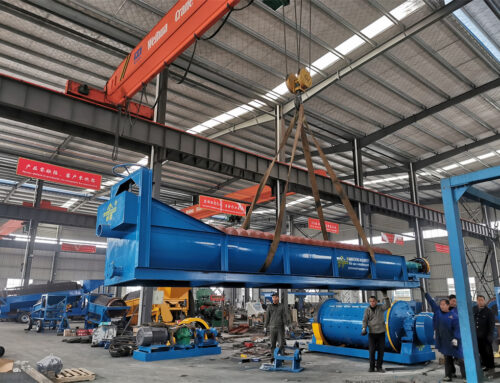
Ball Mills: Better Grinding with Less Energy
Conventional ball mills operate at relatively low energy efficiency—often converting less than 1-2% of input energy into new surface area, with the remainder lost as heat, sound, and vibration. Modern ball mill designs address this through several innovations:
– Variable Frequency Drives (VFDs) : By matching mill speed to feed characteristics rather than running at fixed speed, VFD-equipped mills reduce energy consumption by 12–18% in typical applications. VFDs also enable soft starting (reducing peak electrical demand charges) and provide real-time torque monitoring.
– Optimized Liner Designs: Modern shell liners and lifter bars are engineered through DEM (Discrete Element Method) simulation to maximize grinding efficiency while minimizing parasitic energy losses.
– Improved Grinding Media: High-chrome and forged steel media with optimized size distribution reduce ball consumption while maintaining throughput.
– Classification Circuit Integration: Closed-circuit classification (cyclones or screens) ensures that only properly sized particles exit the mill, eliminating “overgrinding”—one of the largest hidden energy costs in mineral processing.
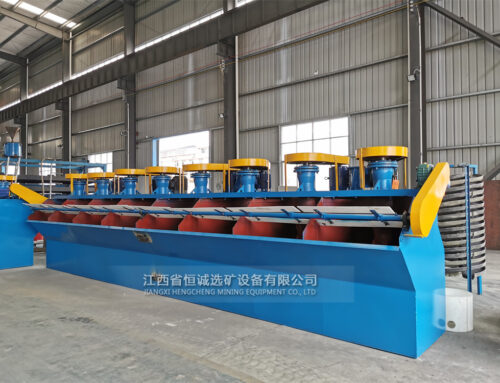
Flotation Machines: Smarter Bubble Generation
Traditional mechanical flotation cells consume significant energy simply to suspend solids and generate bubbles. Modern flotation systems have reduced this energy footprint through:
– High-Efficiency Rotors and Stators: Computational fluid dynamics (CFD)-optimized designs achieve the same recovery with 15–20% lower power draw per cell.
– Tank Cell Configurations: Taller, narrower cells reduce the energy required for solids suspension without sacrificing residence time.
– Froth Crowding and Level Control: Automated level control prevents unnecessary pumping and reduces the energy required to maintain froth stability.
– Coarse Particle Flotation (CPF): By recovering particles up to 1 mm (versus conventional 150 μm limit), CPF reduces the grinding energy required before flotation, with lab tests achieving 89.6% copper recovery in coarse fractions.
Practical Steps for Plant Operators
- Audit your current mill and flotation energy consumption per ton processed. Benchmark against industry averages.
- Consider VFD installation if your mill currently operates at fixed speed. Payback is typically 12–18 months.
- Review grinding media quality and sizing. Premium media with optimized size distribution reduces consumption 10–15%.
- Upgrade flotation cell rotors/stators during scheduled maintenance. Modern designs deliver immediate efficiency gains.
- Implement rougher-scavenger-cleaner optimization to reduce recirculating loads and unnecessary power draw.
How Hengcheng Can Help
Jiangxi Hengcheng’s ball mills and flotation machine designs incorporate modern efficiency features including optimized discharge grates, high-chrome liners with custom lifter profiles, and flotation cell configurations matched to specific ore types. The company‘s engineering team can advise on retrofit upgrades for existing plants as well as new installations.