You wouldn‘t build a house without a soil test. Yet every year, mining operations invest in gravity separation equipment without first understanding their ore’s specific gravity response characteristics. The result? Suboptimal recovery, wasted capital, and months of operational troubleshooting.
Ore testing—also called mineral processing testwork or beneficiation feasibility testing—is not an optional expense. It is the single most important investment you will make before purchasing equipment.
Why Ore Testing Matters for Gravity Separation
Gravity separation relies on density differences between target minerals and gangue (waste). But density alone doesn‘t tell the full story. Key factors that determine gravity separation success include:
- Particle Size Distribution (PSD): What’s the optimal grind size for liberation? Too coarse, and valuable minerals remain trapped in gangue. Too fine, and fines may be lost in tailings.
- Mineral Liberation Characteristics: At what particle size are target minerals fully liberated from gangue?
- Specific Gravity Differential: Is the density difference between valuable mineral and gangue large enough (typically above 1.5) for effective gravity concentration?
- Mineral Morphology: Flat, flaky particles behave differently from equant, rounded particles on a shaking table.
- Clay and Slimes Content: High clay content disrupts gravity separation and often requires pre-treatment (scrubbing, desliming).
The Ore Testing Process: What to Expect
A thorough ore testing program typically follows this sequence:
– Stage 1 – Preliminary Characterization: The laboratory performs chemical assays to determine grade and identifies gangue mineralogy through XRD or polished section microscopy. This determines whether gravity separation is theoretically possible.
– Stage 2 – Screening and Sizing: The sample is screened into narrow size fractions (e.g., +1mm, 1mm to 0.5mm, 0.5mm to 0.2mm, 0.2mm to 0.074mm, etc.). Each fraction is assayed separately to understand whether gold or other valuable minerals are concentrated in specific size ranges.
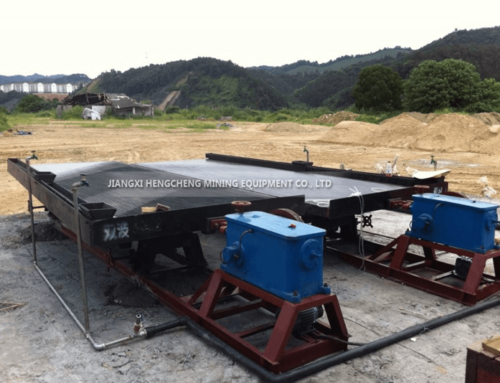
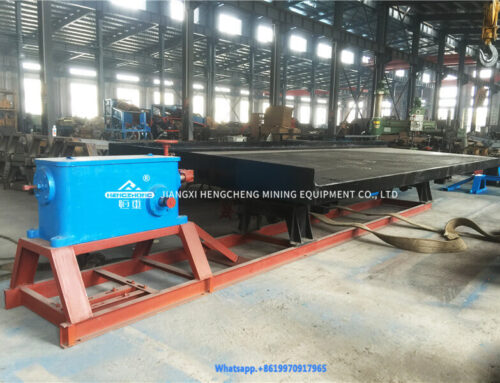
– Stage 3 – Gravity Separation Testing: Using laboratory-scale gravity equipment (a small shaking table, spiral concentrator, or centrifugal concentrator), the laboratory runs the sample to determine:
– Maximum achievable recovery percentage
– Concentrate grade at different recovery levels
– Optimum feed rate, pulp density, and water flow parameters
– Whether pre-concentration (bulk sorting) is feasible
– Stage 4 – Equipment Selection and Sizing: Based on test results, the engineering team recommends:
– Which equipment type (shaking table, spiral chute, jig, centrifugal concentrator)
– Number of units required
– Grind size for liberation
– Expected recovery and concentrate grade
What Happens When You Skip Testing?
Operations that skip proper ore testing often face:
– Purchasing the wrong equipment: A jig machine for fines-dominated ore, or a shaking table for material that requires a centrifugal concentrator
– Over-grinding: Spending extra crushing/grinding energy when coarser feed would work
– Underperforming recovery: Leaving 20–40% of values in tailings
– Extended troubleshooting: Months spent adjusting slopes, speeds, and water flows trying to compensate for unknown ore characteristics
Hengcheng‘s Testing Philosophy
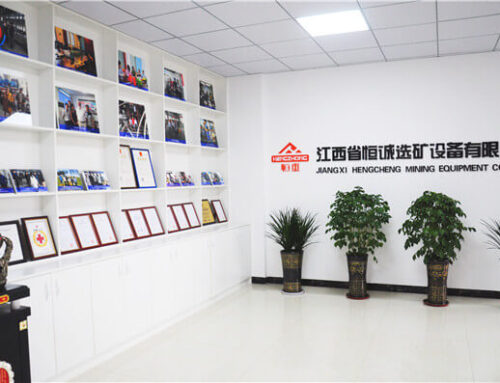
At Jiangxi Hengcheng, ore testing is never an afterthought—it’s the starting point. The company‘s in-house mineral processing laboratory provides:
– Complete mineral analysis and beneficiation testwork
– Process flowchart design based on actual test data
– Pilot-scale confirmation testing before full plant design
– Written reports with clear equipment recommendations
Before You Buy, Ask for Tests
If a mineral processing equipment supplier cannot—or will not—conduct ore testing before quoting you on equipment, consider this a warning sign. The only way to truly know what equipment your ore requires is to put it through the laboratory first.
FAQs
– Q: How much ore sample is needed for testing? A: Typically 50–200 kg
– Q: How long does testing take? A: 2–4 weeks depending on complexity
– Q: Can you test ores that contain sulfide minerals? A: Yes