
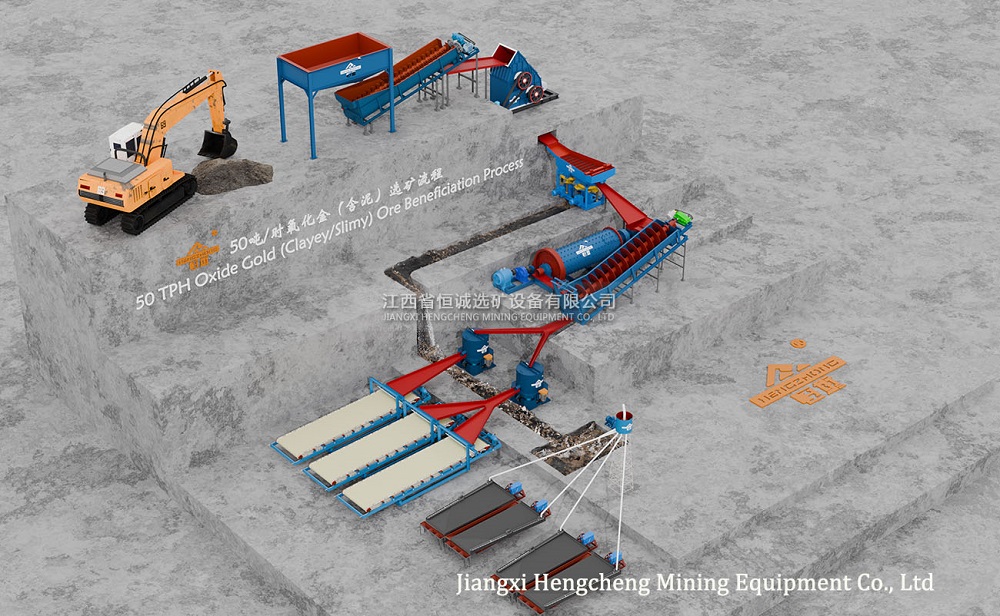
Oxidized Gold Ore Processing: How to Handle High Clay and Complex Particle Sizes
Introduction: Why Oxidized Gold Ore Requires a Customized Flow
Oxidized gold ores are typically formed through long-term weathering and oxidation. The ore structure is relatively loose, and a portion of the gold has already been liberated from the primary minerals. However, processing oxidized gold ore is not as simple as “since the ore is loose, just send it straight to gravity separation.”
In reality, oxidized gold ore often contains a mixture of clay, coarse gold, fine gold, and gold interlocked with gangue minerals. Therefore, gold in different particle sizes and occurrence states must be recovered gradually through different processing stages.
A typical oxidized gold ore gravity separation flow consists of:
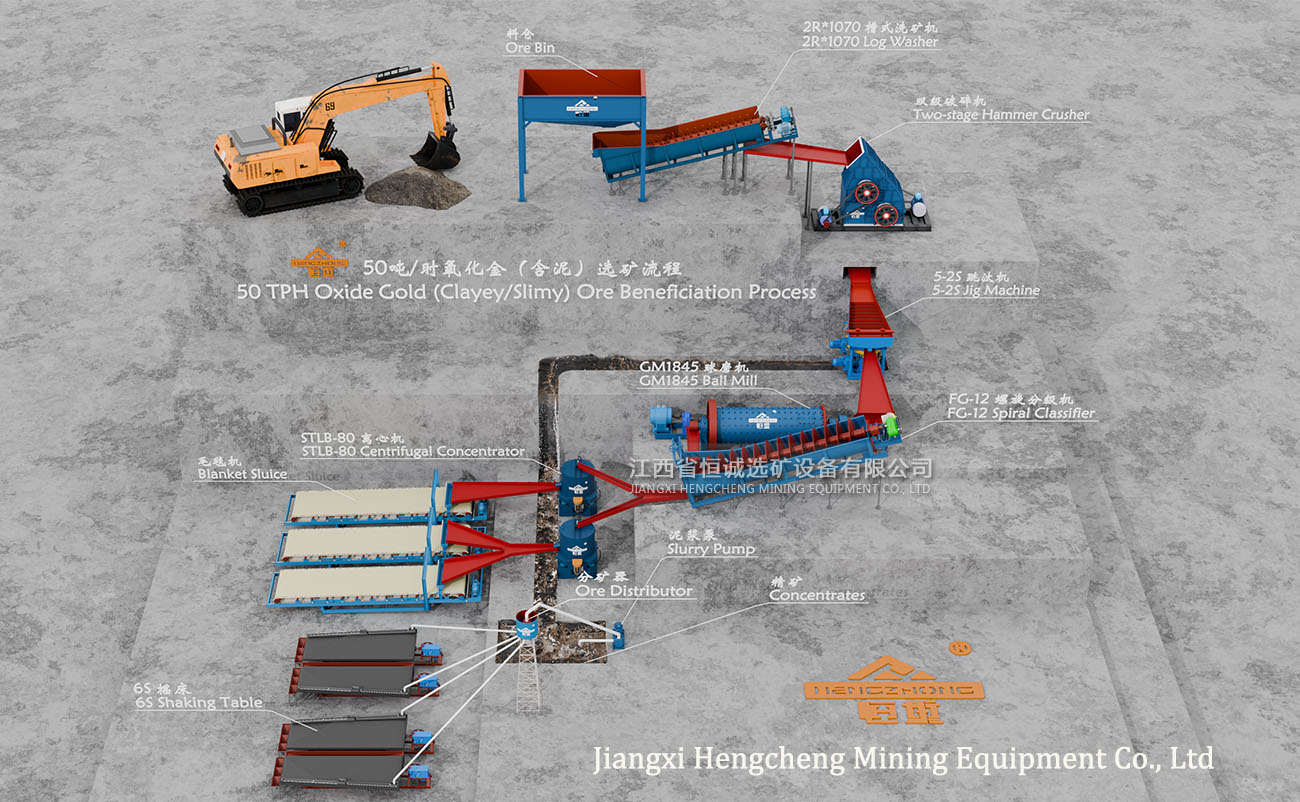
Washing → Crushing → Jigging → Ball Milling → Classification → Centrifugal Concentration → Shaking Table → Blanket Sluice
The core of this process is not simply adding more equipment. It is about ensuring each stage handles the specific state of the gold it is best suited for.
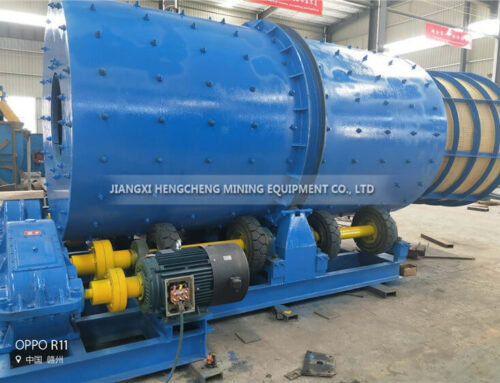
Why is Washing the First Step in oxidized gold ore processing?
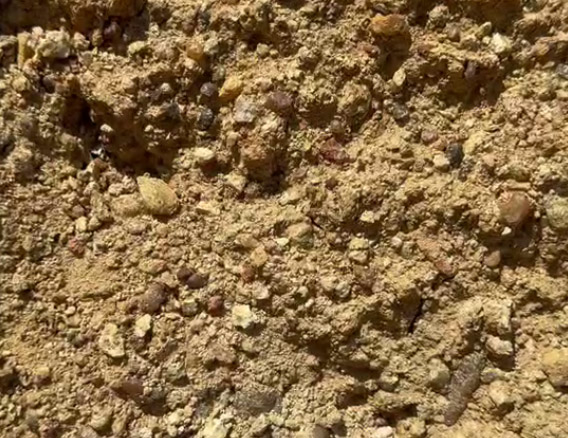
After weathering, oxidized gold ore often contains a certain amount of clay and slime. If this muddy material is not handled at the front end, it will affect the pulp density and separation efficiency of downstream gravity equipment. It can also wrap around gold particles, preventing them from being fully exposed.
First of all, the purpose of washing is not just to “clean the ore.” It is about scrubbing, dispersing, and desliming. This separates the clay from the coarser ore particles while releasing as much liberated gold as possible. Consequently, the material condition becomes much more suitable for the subsequent crushing and gravity separation stages, reducing the negative impact of slime on jigs and other equipment.
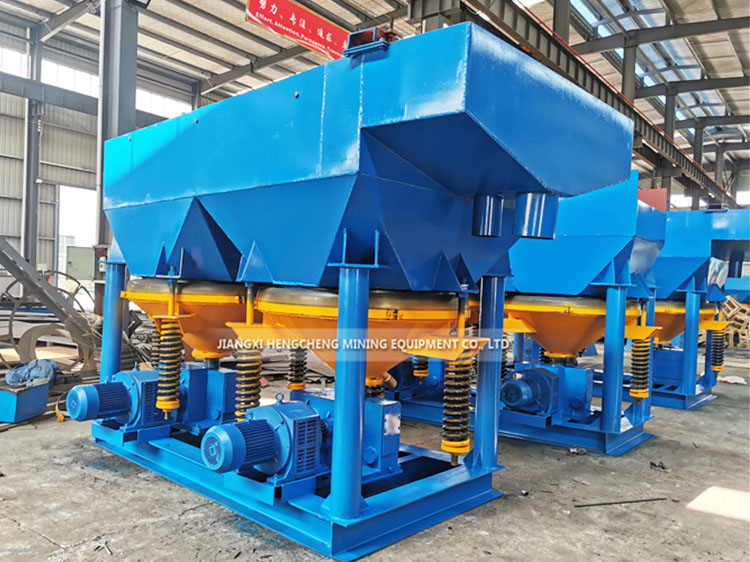
Why Use a Jig Machine After Crushing?
After washing, the material is crushed to prepare it for the next separation stage. However, not all crushed material should be sent directly to the ball mill.
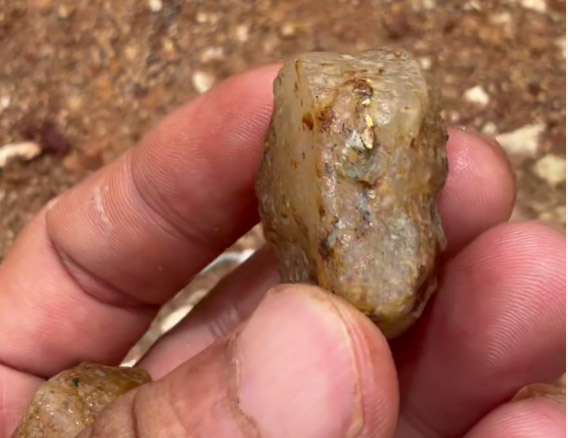
The reason is simple: a portion of the gold in oxidized ore is already in a coarser, well-liberated state. There is no need to over-grind this portion. Therefore, using a jig machine at this stage allows for the pre-concentration of coarse, liberated heavy minerals based on density differences.
This step serves two main purposes:
Early Recovery: It recovers easily separable gold early, reducing gold loss in subsequent grinding stages.
Reduced Load: It reduces the amount of material entering the ball mill, preventing already-recoverable coarse gold from being over-ground.
In short, the jig machine acts as a coarse gold pre-concentration unit in the front end of the flow.
Why Continue Grinding After Jigging in oxidized gold ore processing?
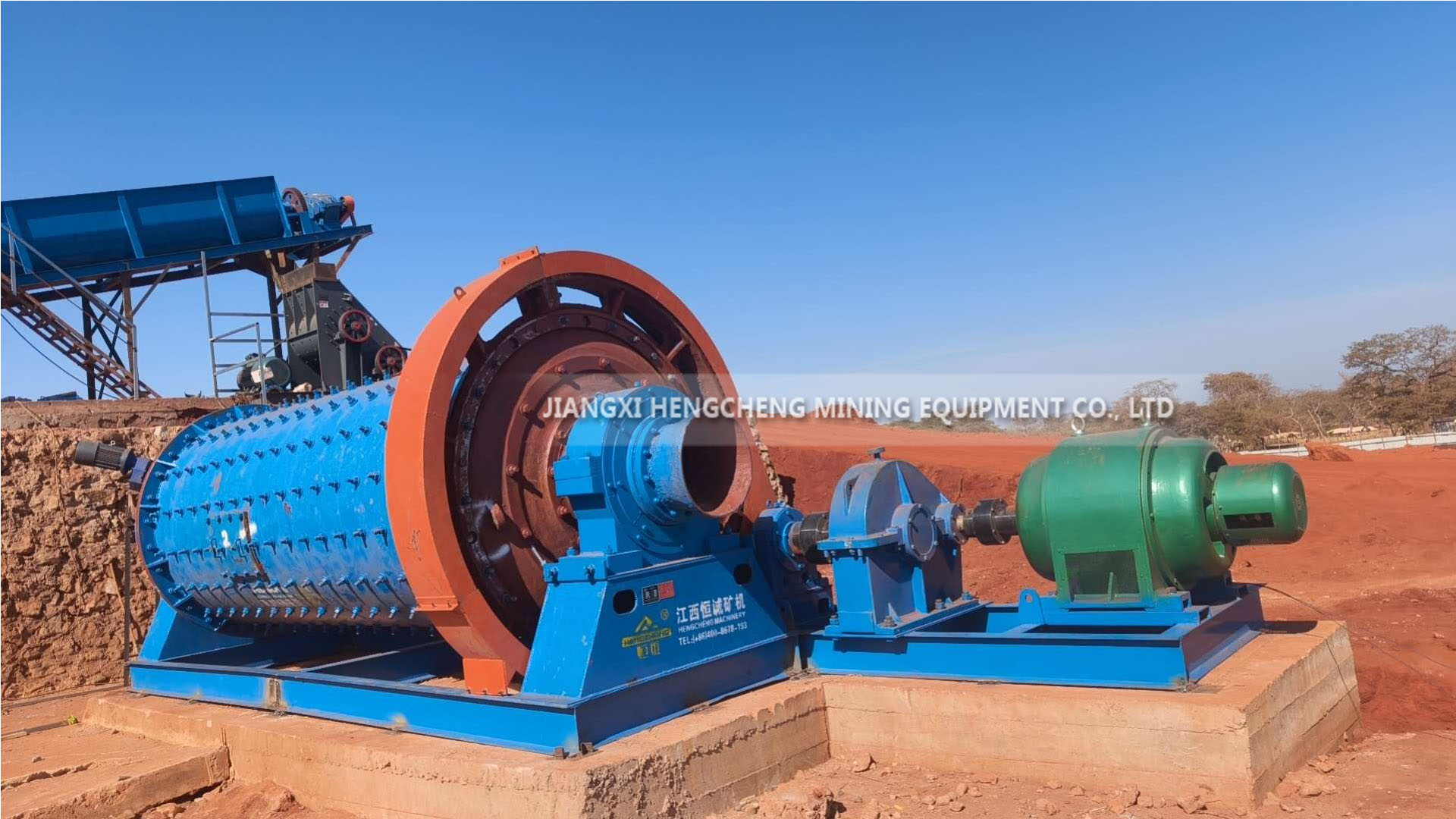
The jig machine can recover a portion of liberated coarse gold, but it does not mean all gold in the ore is liberated. Some gold may still be interlocked with quartz, iron oxide, or other gangue minerals, or disseminated at a finer particle size. Without full liberation, gravity separation alone will not achieve ideal recovery.
Therefore, the tailings from the jig machine need to enter a ball mill for further grinding. This helps progressively liberate the interlocked gold and creates favorable conditions for fine gold recovery. However, grinding is not “the finer, the better.” Over-grinding not only increases energy consumption but also produces excessive slime, which harms subsequent gravity separation. The actual grinding fineness must be determined based on the gold’s embedded particle size and liberation characteristics.
Why is Classification Necessary After Grinding?
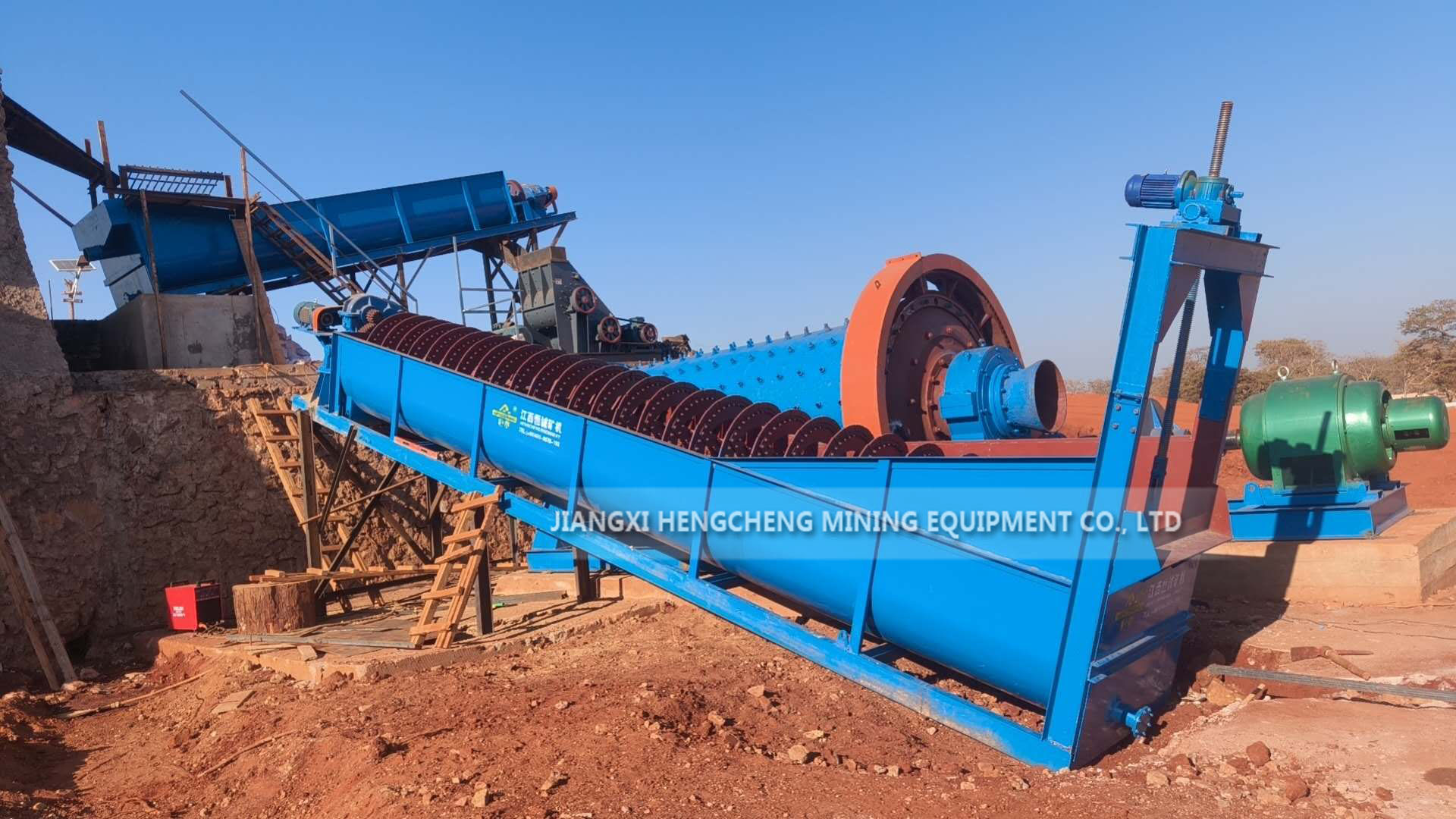
The ball mill is responsible for grinding the ore finer, but after grinding, not all particles meet the optimal size for separation. This is where the spiral classifier comes in.
The classifier separates the ground material by particle size. Fine particles that meet the requirements move to the next separation stage, while coarser, unliberated particles are returned to the ball mill for further grinding. Therefore, the ball mill handles the “grinding,” while the classifier controls “how fine to grind.”
Together, they form a closed-circuit grinding system. This prevents a large amount of qualified material from being repeatedly ground, while allowing unqualified coarse particles to continue receiving grinding. After this stage, more gold interlocked with gangue is liberated, preparing for fine gold recovery.
Why Use a Centrifugal Concentrator After Grinding & Classification?
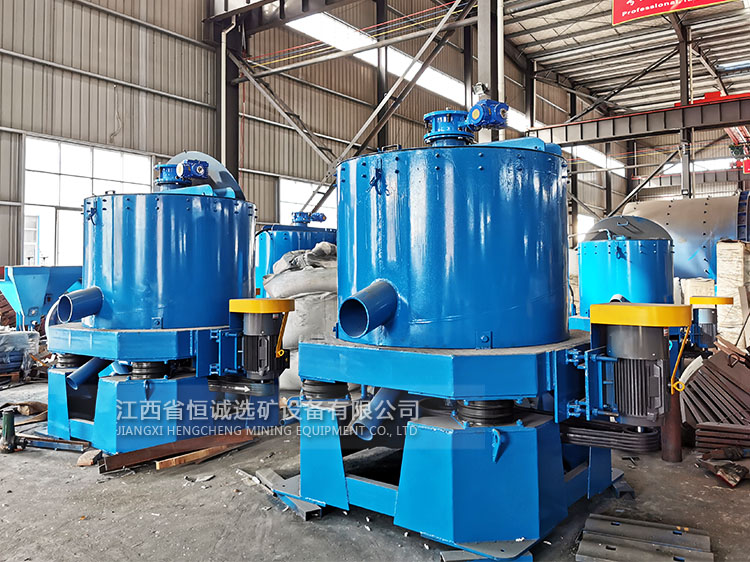
After grinding and classification, the gold particle size in the slurry becomes finer, and a portion of the fine gold is fully liberated. At this point, continuing to use ordinary coarse gravity separation equipment may be limited by particle size.
The centrifugal concentrator uses centrifugal force to enhance gravity separation, effectively concentrating fine heavy minerals in the slurry. It is often placed after grinding and classification to recover this fine gold. Simply put, the jig machine handles coarser, already-liberated gold, while the centrifugal concentrator handles the fine gold released after grinding. This allows gold of different particle sizes to be targeted and recovered at different stages.
Why Does Centrifugal Concentrate Need Shaking Table Upgrading?
The centrifugal concentrator focuses on improving the recovery of fine heavy minerals. However, the concentrate obtained after centrifugal enrichment does not necessarily reach the final required grade. It may still contain a certain amount of gangue and other dense minerals.
Therefore, the concentrate from the centrifugal concentrator can enter a shaking table for further upgrading. The shaking table uses water flow and bed motion to stratify minerals of different densities and particle sizes, further separating gold from other heavy minerals. Consequently, the focus at this stage shifts from “recovering as much as possible” to “improving concentrate quality.”
What Role Does the Blanket Sluice Play at the End?
After the previous gravity separation stages, most easily recoverable gold has been concentrated. However, the tailings may still contain a small amount of fine, flaky, or slurry-borne gold.
The blanket sluice (or sluice box with gold carpet) is set at the end of the process as a supplementary recovery step. As the slurry passes over the blanket surface, some fine heavy minerals are trapped, further recovering gold that was not fully captured by previous equipment. Therefore, the blanket sluice does not replace the jig, centrifugal concentrator, or shaking table. It serves as a final safety net to minimize fine gold loss in the tailings.
Understanding the Complete Oxidized Gold Processing Flow
When connected together, it becomes easier to understand why each machine is placed where it is:
Washing: Solves the clay and slime problem in the raw ore.
Crushing: Prepares suitable feed size for subsequent separation and grinding.
Jigging: Prioritizes the recovery of already-liberated coarse gold.
Ball Mill + Classifier: Further liberates gold interlocked with gangue and controls grinding size.
Centrifugal Concentrator: Recovers fine heavy minerals released after grinding.
Shaking Table: Further upgrades the enriched heavy minerals.
Blanket Sluice: Provides supplementary recovery of fine gold in the end-stage slurry.
In conclusion, oxidized gold ore processing is not simply “the more equipment, the better.” It should be arranged based on clay content, gold particle size distribution, gold occurrence state, and liberation degree. A truly reasonable flow allows each piece of equipment to handle the material it is best at, ensuring recovery rate while balancing concentrate grade and overall processing efficiency.
Frequently Asked Questions
Q: Why is washing so important for oxidized gold ore?
A: Oxidized gold ore often contains high clay and slime. Washing removes these impurities, prevents equipment clogging, and liberates gold particles for better gravity separation.Q: What is the difference between a jig machine and a centrifugal concentrator?
A: A jig machine primarily recovers coarse, liberated gold, while a centrifugal concentrator is designed for fine and ultra-fine gold recovery after grinding.Q: What is closed-circuit grinding?
A: It is a system where a ball mill and a spiral classifier work together. The classifier returns coarse, unliberated particles to the mill for further grinding, ensuring the correct particle size for separation.Q: Do I need all these machines for my oxidized gold project?
A: Not necessarily. The exact flow sheet depends on your ore’s clay content, gold particle size, and liberation degree. We provide customized solutions based on free ore testing.
Why Choose Hengcheng for Your Oxidized Gold Project?
Jiangxi Hengcheng Mining Equipment Co., Ltd. has over 25 years of experience designing gravity separation flows for oxidized gold, alluvial gold, and complex ores. Furthermore, we provide a full package of services—from engineering consultation and mineral processing experiments to on-site installation, commissioning, and personal training. Therefore, you can rely on us from the very beginning of your project to the final operation.
Contact us today for a customized oxidized gold processing solution and equipment quotation.

Leave A Comment
You must be logged in to post a comment.