Hard Rock Tin Processing Plant for Primary Tin Recovery
Unlike alluvial (placer) tin ore, which can be washed and screened directly, hard rock tin ore is embedded within solid rock formations, such as granite or pegmatite. First of all, the valuable cassiterite is tightly interlocked with the gangue minerals. Therefore, hard rock tin processing requires a much more complex flow sheet involving multi-stage crushing, grinding to achieve mineral liberation, and subsequent gravity separation. This plant is designed to handle the toughest primary tin ores with maximum efficiency.
2000 TPD Rock tin processing plant flow sheet
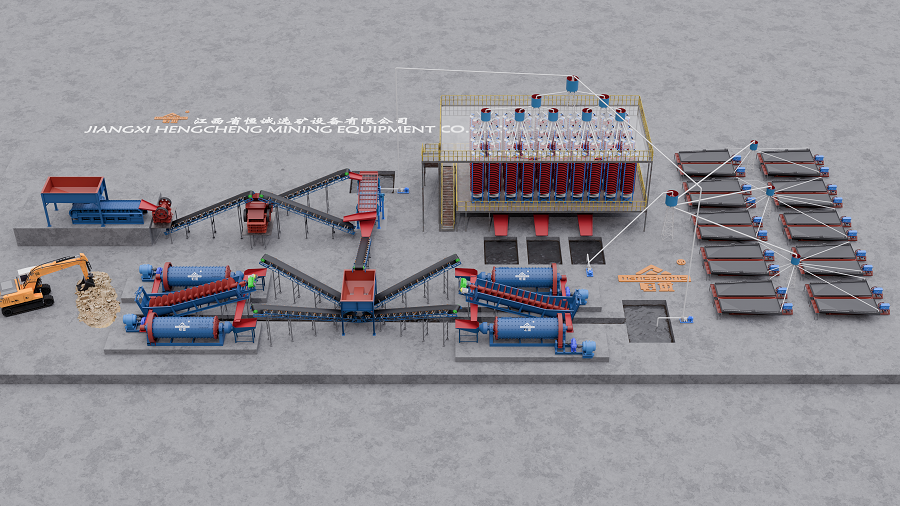
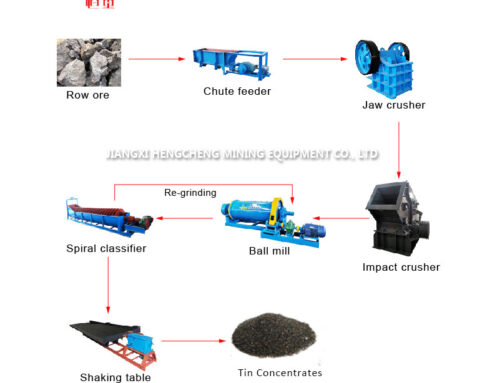
This 3D flow sheet illustrates a complete 2000 TPD hard rock tin processing plant. The core design logic is “Controlled Crushing → Closed-Circuit Grinding → Gravity Concentration.”
01 Two-Stage Closed-Circuit Crushing:
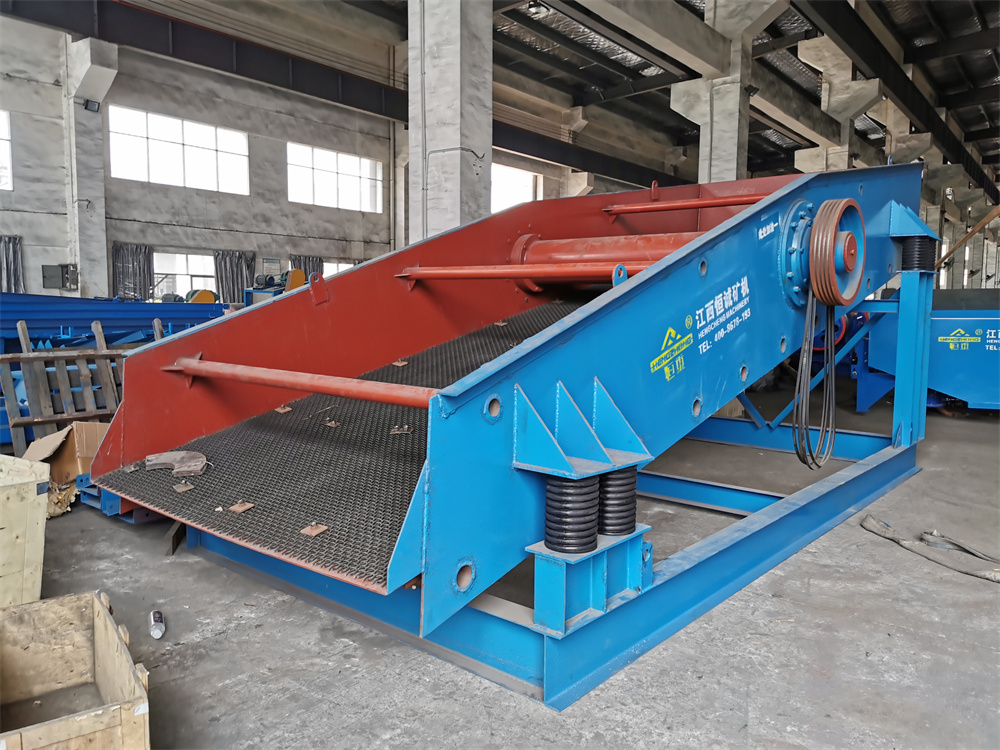
Raw ore is fed into a Primary Jaw Crusher (PE) for coarse crushing. Subsequently, the material goes to a Secondary Jaw Crusher (PEX) or cone crusher. Crucially, a Vibrating Screen is installed after the secondary crusher. This forms a closed-circuit crushing system: qualified fine materials pass through the screen to the next stage, while oversized materials are returned to the secondary crusher.
02 Closed-Circuit Grinding:
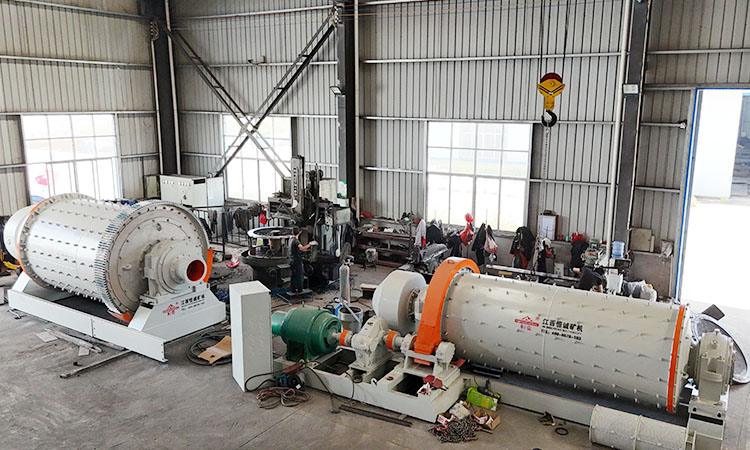
The screened fine ore enters a Ball Mill for further grinding. The mill operates in a closed circuit with a Spiral Classifier, which returns coarse particles for regrinding and sends the qualified slurry to the gravity separation stage. This ensures complete liberation of tin minerals.
03 Spiral Chute Roughing:
The classified slurry is pumped to a distributor and fed into multiple Spiral Chutes. Spiral chutes are highly efficient for primary roughing, capturing the majority of heavy tin minerals and producing a rough concentrate while discarding light gangue.
04 Shaking Table Cleaning:
The rough concentrate from the spiral chutes is fed onto Shaking Tables for final upgrading. Shaking tables provide precise density separation, producing a high-grade tin concentrate ready for smelting, while the middlings are returned for further processing.
Hard Rock tin processing plant Main Equipment
PE Jaw Crusher
For coarse crushing of hard rock.
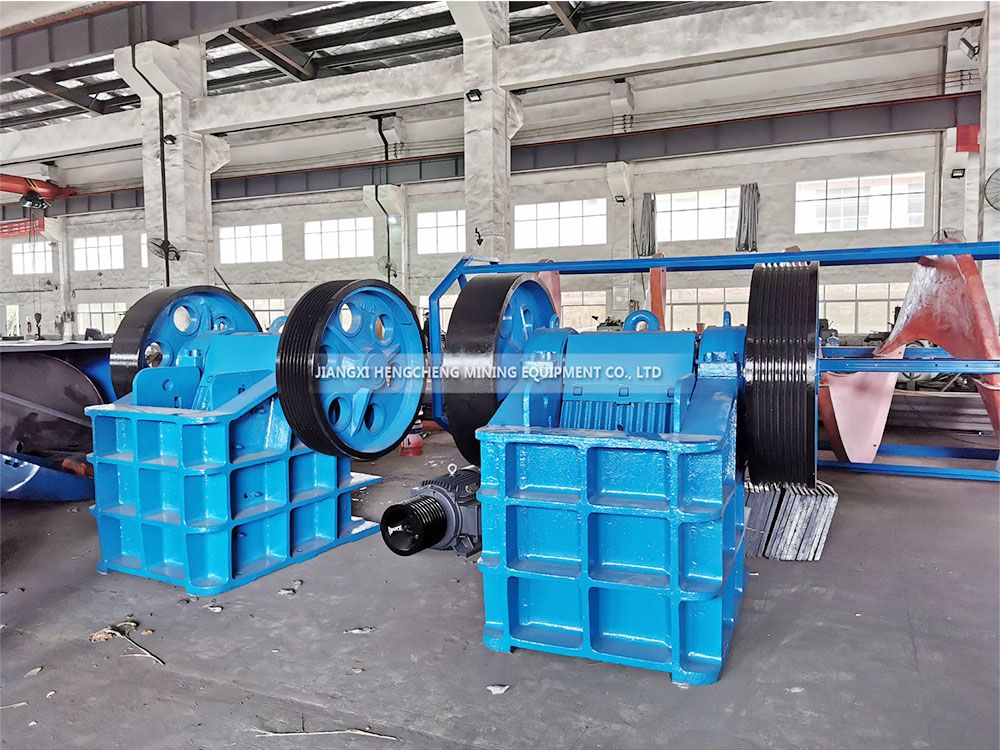
PEX Jaw Crusher
For fine crushing of hard rock.
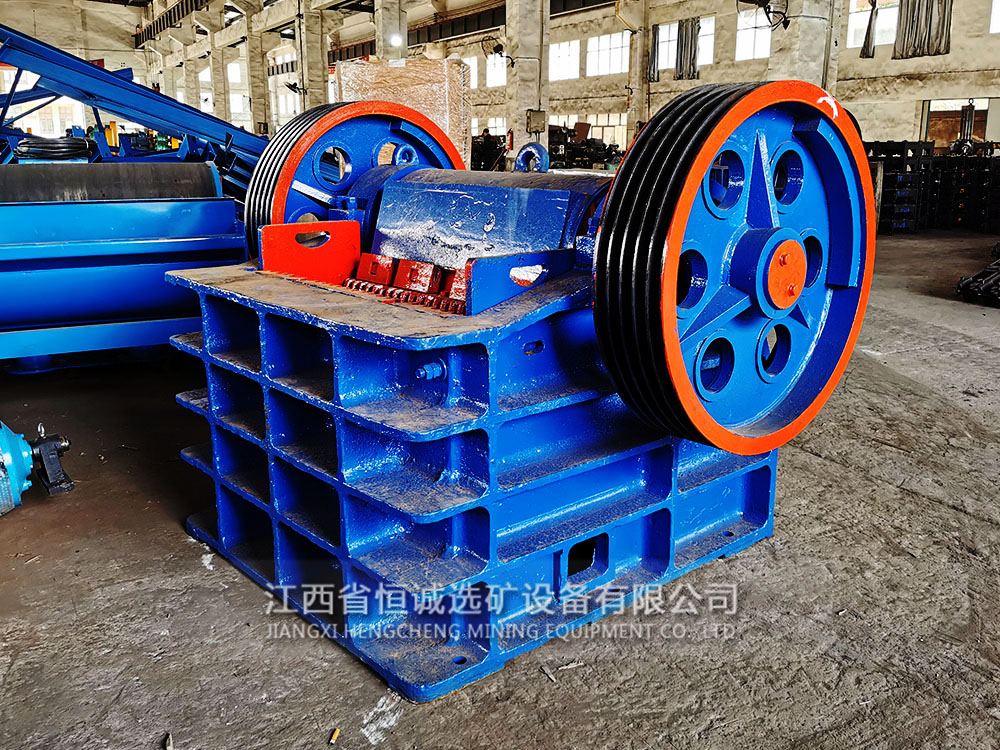
Vibrating Screen
For controlling mill feed size.
Ball Mill
For fine grinding and ore liberation.
Spiral Chute
For high-capacity roughing of tin minerals.

Shaking Table
For high-precision final concentrate enrichment.

Real Case Working Video
Why Add a Vibrating Screen Before Grinding?
In hard rock tin processing, controlling the feed size to the ball mill is critical. First of all, installing a vibrating screen after the secondary crusher ensures that only properly sized material enters the ball mill. Furthermore, oversized rocks are screened out and sent back for re-crushing. Therefore, this closed-circuit crushing design prevents overloading the ball mill, significantly increases grinding efficiency, reduces energy consumption, and ensures a uniform feed size for the subsequent gravity separation stages.
Frequently Asked Questions About Alluvial Tin Processing
Q: What is the target grinding fineness for hard rock tin ore?
A: It depends on the dissemination size of your cassiterite. Generally, we grind to around 0.2mm to 1mm to ensure adequate liberation without over-grinding, which can cause tin loss (slime). We offer free ore testing to determine the optimal size.
Q: Why use both spiral chutes and shaking tables?
A: Spiral chutes have a large processing capacity and are ideal for roughing out the bulk of the heavy minerals. Shaking tables have a smaller capacity but provide high-precision separation, allowing us to upgrade the rough concentrate into a final high-grade product.
Q: Can I use this plant for tin ore with sulfides?
A: Yes. If your ore contains sulfide minerals (like pyrite or arsenopyrite), we can add a flotation circuit or magnetic separation to remove them and further purify the tin concentrate.